One Perspective. One Poem. 2014-10-18

I wrote this while spending a week of Yin Yoga, poetry, and music with Biff Mithoefer and Prema Mayi. It comes from a place of personal vision that, with mindful perspective and feelings of loving-kindness and connectedness, I am my natural me. It also comes from a place of tribute to my father, and all of the spirit-guides that help me find my way.

Soaring up high, I see my way;

Caring for others, living each day;

Walking my path with all things as One:

I share my heart freely, for I am your son.

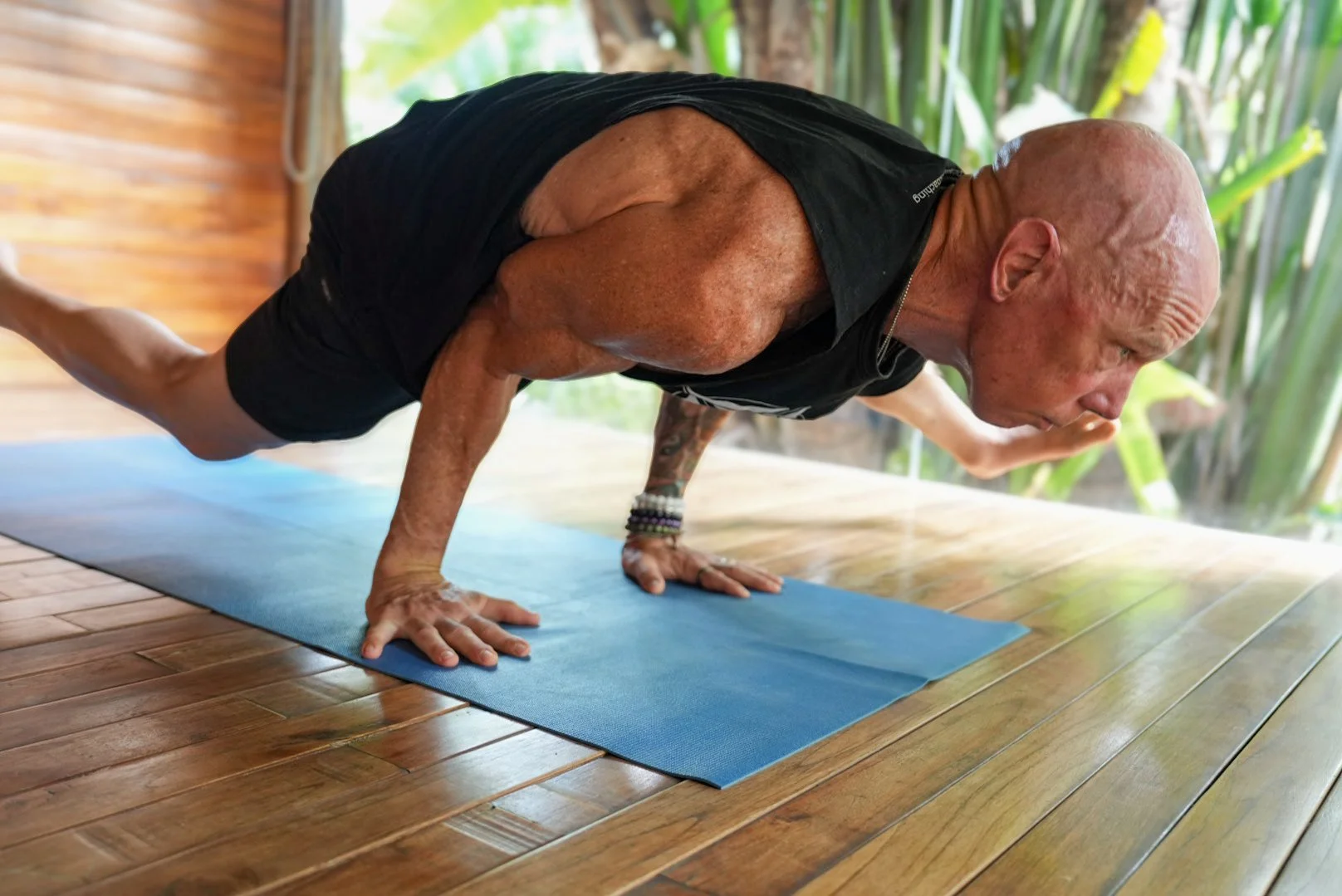
Bodybuilding and Yoga

I started lifting weights in my adult life primarily as a means, I told myself and others, to maintain an athletic lifestyle late into life… to be able to ski and ride well for as long as possible.

Inside, however, I think I knew it just made me feel good… it was easier to maintain positive energy, I became more active, I became more aware of my whole body (the union of body-mind-spirit), and I liked how I looked.

So, here was my dilemma: I believe my natural self to be relatively ego-less… or perhaps said differently, more comfortable in a non-attention-getting environment; I thrive when I feel like I’m helping things function better or people live happier in a behind-the-scenes way. My perception of the term “bodybuilding” seemed to be in conflict with my natural tendencies to not draw attention to myself. After all, weren’t bodybuilders just bringing attention from others to themselves? Wasn’t I just bringing attention to myself?

But as my strength training regimen continued, and my interest in understanding my whole body grew, I realized more and more that I was building my whole body. As my body adapted to how I trained and practiced living, my mind adapted, my emotions adapted, and my sense of self adapted. I knew my (whole) body better.

And as I knew my body better, I listened to my body better. I came to realize both from my expanding yoga practice and my expanding bodybuilding lifestyle, that my body, my whole body, knows innately how to be healthy and happy. I just have to listen and understand it.

I now know that modern Hatha yoga asana and bodybuilding grew together in the late 1800’s and early 1900’s with the rise of an international “physical culture” and a growing interest in fitness and body-mind-soul health. (1) Many of these Western-influenced, posture-focused yogis were indeed also bodybuilders and gymnasts.

Come to think of it, when I lift (bodybuilding) I am present-moment focused, I am aware of my breath, and I am moving with my breath. That’s yoga, eh? When I practice yoga asana, I am flexing and extending my joints, I am working on body strength (stability) and flexibility (mobility), and I am focused on being my naturally awesome self… accepting how I am, yet putting in the dedicated daily work required to bring out my best. That’s bodybuilding, yes?

I also wonder now if bodybuilding, when viewed from the perspective of whole-body building, is a way for us to view a sustainable world. It seems to me that when I pay attention to my whole body, I eat more naturally and am healthier, I care more about the survival and happiness of our interconnected communities, and I maintain a long-term perspective of my life and our world. I am more resilient. I live, I learn, and I adapt. I value everything more, because I know what my body desires… and it desires whole health (for survival)… and it desires interdependent, supportive relationships with all (also for survival).

Through whole-body building and yoga-practicing, I know my body. And now I know that my body knows the way to be healthy and happy.

And yes, my body knows that being outside with others… skiing and riding, hiking and biking… connected… is where it feels alive!

(1) Singleton, Mark: Yoga Body – The Origins of Modern Posture Practice; Oxford University Press (2010).

One Perspective: Daily Intentions + Long-Term Vision

Health and happiness can be found living in the present moment.

Yet, we often find our minds wandering into the future or stuck in the past.

I am a very big-picture person; I have an innate desire to understand, Why? That is, how does what-I-do-today relate to who-I-am and my understanding of myself and my life, or how do my daily actions relate to my life’s goals?

For me, once I understand my long-term vision of my life, it becomes easier for me to find ways each day to manifest that vision.

It all starts with a continued practice of understanding who I am, much of which is just learned by living life each day, taking the next step, and paying attention… being open to change and different perspectives.

It is reinforced by a mindful intention to be aware, to accept what is happening around me, and to adapt with ease and mindful intention to learn and proceed accordingly.

It is heightened by my realization that I can’t control the future and that becoming attached to an outcome might only cause suffering.

It is solidified in the inner-knowing that I am a child of the Universe, alone on the one hand doing the best I can, but intimately connected to, and supported by, everyone and everything around me.

All I can do each day is to act in alignment with my long-term vision of who I am… and intentionally bring my presence back to that mindful intention whenever my life’s experience takes me on a different path.

“Take a mindful step forward each day in an intentional direction, letting go of the last step, and having faith in the next step. Walk today towards your dreams of tomorrow… realizing everything could change tomorrow when you will step again. Act out your intentions today, and your dreams for tomorrow will live today.”

If you want to be good, walk with goodness. If you want to be at peace, walk with a peaceful presence. If you want to feel love, walk with loving-kindness in your heart. If you want to feel inner power, walk with a sense of inner knowing.

Walk your walk. Today.

One Perspective: 2014-10-03

If we are each comprised of the same celestial matter,

Then we are each inextricably connected;

If we are each comprised of genetic systems, imprinted with what we experience and what we are fed,

Then we have the ability to adapt and reprogram ourselves;

If we accept our true nature and are deeply aware, living in own bodies,

Then we have the internal power to change and affect all bodies;

If we desire peace,

Then we can have it, by feeling at peace and sharing feelings of peace.

Dignity and Mindfulness

A few weeks ago, I shared a personal vision that spoke of my intention to lead in a manner that inspires dignity.

I defined dignity as follows: an internal state of peace that comes with the recognition and acceptance of the value and vulnerability of all living things. (1)

One might also think of dignity as practicing non-judgmental awareness in a manner which leads to kindness and feelings of compassion for yourself and for others. One might also just think of this as practicing a higher level of respect for yourself and for others.

Practicing this awareness in a sustainable way is what we might call practicing loving-kindness mindfulness.

Here are some steps to help develop this practice: (2)

Find yourself in a state of support and safety, perhaps somewhere where you feel connected to nature
Set your intention, answering the question “What am I practicing?”
Cultivate a witnessing perspective, observing your thoughts like clouds drifting by, being aware of your inner landscape and old unhealthy autopilot reactions
Stabilize attention and strengthen focus, using the breathe as a tool to nurture the harmony of intention and attention
Strengthen self-regulation, settling negative energies intentionally and shortening the time that it takes you to recover from emotional hijackings
Practice loving-kindness meditation, calming the inner critic and practicing non-judgmental acceptance and compassion for yourself and others.

I have led workshops or classes intended to help people heal, build self-esteem and resiliency, and find happiness. Many of these workshops have utilized outdoor education and strengths-based adventure as a means to build a sense of self and self-efficacy. To me, however, successful experiences all start with a inherent culture of dignity and mindfulness.

It is time to practice.

What’s your perspective?

(1) Donna Hicks, PhD (2011): “Dignity – The Essential Role It Plays in Resolving Conflict”

(2) Terry Fralich, LCPC, JD (2014): “The Five Core Skills of Mindfulness – A Direct Path to More Confidence, Joy and Love”